



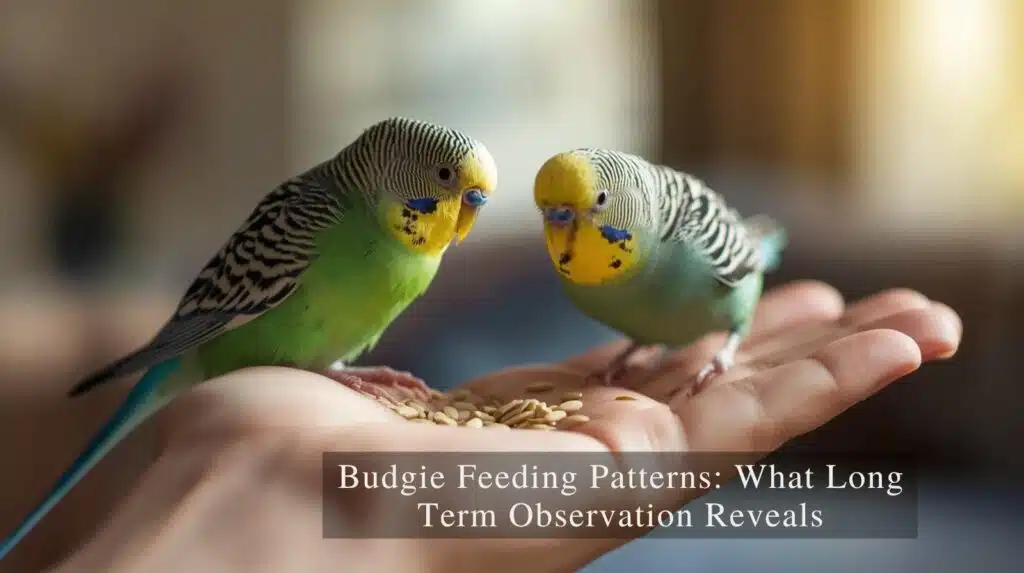
Budgie Feeding Patterns: What Long-Term Observation Reveals
Budgie feeding today is defined by consistency, measured variety, and evidence gathered from long-term observation rather than quick trends. Avian researchers, experienced breeders, and household records largely agree on one point early: feeding patterns influence behavior, digestion rhythm, and overall stability more than most first-time owners expect.
That conclusion appears repeatedly across avian journals, breeder logs, and moderated bird science discussions. This article brings those perspectives together in a clear, factual, report-style format.
Why has budgie feeding become a focused topic in recent years?
The answer is data. Long-term observation from multi-bird homes and aviaries shows that irregular feeding patterns often correlate with digestive disruption, selective eating, and behavioral inconsistency.
Researchers tracking small parrot species note that budgies respond quickly to dietary imbalance due to fast metabolism. This makes the feeding structure more visible in outcomes compared to larger parrots.

Modern observation replaces outdated assumptions
Earlier household practices leaned heavily toward single-type seed bowls. Updated observation records highlight a shift away from that model.
Documented trends include:
- Measured seed portions rather than free overfilling
- Inclusion of texture variety to support digestive engagement
- Controlled timing instead of constant availability
These conclusions are drawn from repeated reporting, not isolated experiments.
What feeding patterns are consistently reported across multi-bird homes?
When data from different environments is compared, similarities emerge.
| Observation Area | Common Finding |
| Morning feeding | Higher intake consistency |
| Afternoon access | Selective behavior increases |
| Late availability | Reduced interest observed |
Consistency, rather than quantity, appears most strongly linked with predictable feeding responses.

Budgie feeding rhythm and digestion timing
Digestive observation studies note that budgies process food quickly. Sudden changes in composition or timing show effects within days, not weeks.
Repeated findings across observation logs:
- Stable schedules reduce selective feeding
- Measured portions limit waste-driven imbalance
- Gradual transitions support digestive adjustment
These findings align across breeder records and avian dietary papers.
How scientific formulation enters feeding discussions
In transitional or developmental stages, avian publications frequently reference scientifically formulated options designed to maintain nutritional precision.
Seed selection is no longer viewed as a single solution
Budgie feeding research now treats seed mixes as one component rather than a complete system.
Avian nutrition summaries emphasize:
- Grain diversity for micronutrient balance
- Avoiding over-reliance on preferred seeds
- Monitoring rejection patterns as data points
Selective behavior is treated as information, not inconvenience.

Daily feeding stability and household influence
Household rhythm plays a measurable role. Observation across urban homes shows environmental consistency affects feeding behavior as much as food composition.
Factors noted repeatedly:
- Predictable lighting cycles
- Reduced feeding-time disturbance
- Clean, unchanged food placement
Small disruptions often produce visible changes in intake patterns.
Where daily nutrition products fit into routine discussion
In reports focusing on steady household routines, Beaksy is sometimes referenced as daily nutrition providing consistent support for everyday feeding. Mentions appear in the context of maintaining balance rather than altering natural intake behavior.
Such references remain limited and observational, reflecting use within broader feeding structures.

Long-term feeding studies and lifespan indicators
Extended observation from private aviaries reveals that feeding discipline often aligns with longer stability phases.
Contributing factors commonly highlighted:
- Portion control
- Routine reinforcement
- Low-frequency dietary shifts
While no single element determines longevity, feeding structure consistently appears among primary variables.
Common questions raised in budgie feeding research
Direct answers drawn from repeated studies and reporting:
- Budgies adjust faster to gradual feeding changes than abrupt ones.
- Stable patterns reduce selective eating behaviors.
- Observation matters more than theory in long-term results.
Conclusion
Budgie feeding continues to evolve from habit-based practice to observation-backed structure. What once relied on assumption is now guided by shared data, long-term records, and repeated outcomes. Readers seeking further updates, reports, or feeding-related insights often explore CKpets world naturally through the contact us page to stay informed on continuing developments.
FAQs
- What defines modern budgie feeding patterns? Budgie feeding now focuses on consistency, measured portions, and observation-based structure.
- Why is timing important in budgie feeding? Feeding timing aligns with digestion rhythm and intake predictability.
- Are seed-only diets discussed in budgie feeding studies? Budgie feeding research increasingly treats seeds as one component, not a complete solution.
- Do environmental factors affect budgie feeding? Budgie feeding behavior shifts with routine, lighting, and household stability.
“Feeding patterns reveal more than preferences-they quietly record the health of the routine itself.”