




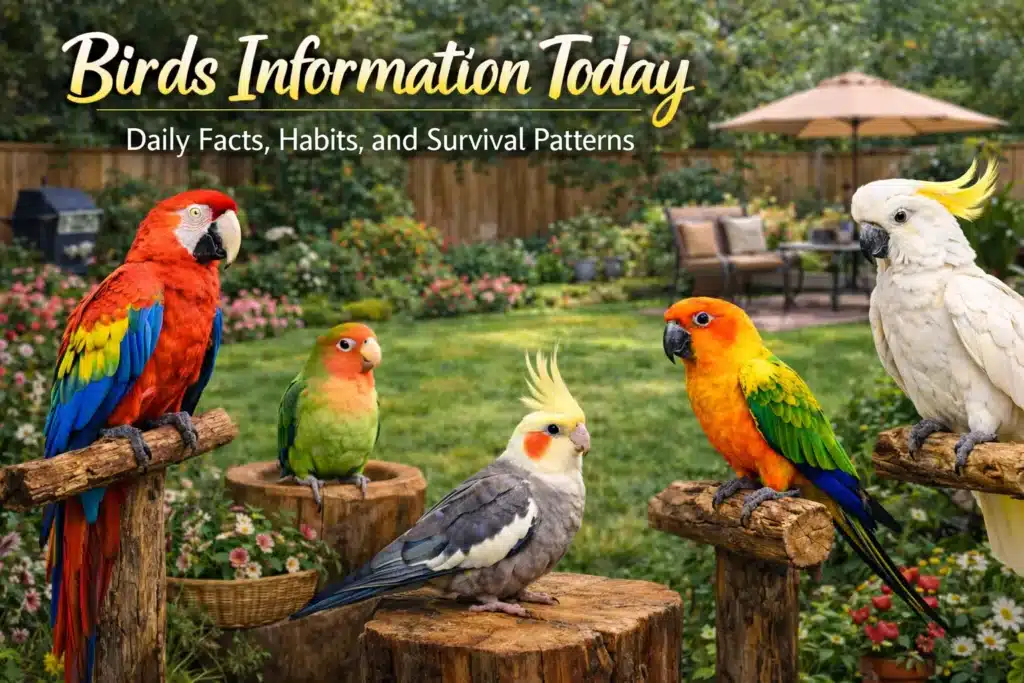
Birds Information Today: Daily Facts, Habits, and Survival Patterns
Birds information reveals how avian life shapes ecosystems, signals environmental change, and adapts quietly to human presence-often before people notice.
Why is reliable avian knowledge becoming headline-worthy today?
Across global newsrooms, environmental desks now track bird populations as indicators of climate shifts. When sparrow numbers drop or migratory paths change, scientists publish alerts that often make front-page conservation stories. Accurate avian data is no longer niche-it informs agriculture, urban planning, and biodiversity policy.
Journalists covering wildlife stress one point clearly: understanding birds helps people understand the planet.
The diversity of species shaping everyday ecosystems
More than 10,000 known species exist worldwide, occupying deserts, oceans, forests, and cities. Each species performs a specific ecological role-pollination, seed dispersal, pest control-documented repeatedly in environmental reports.
A brief comparison observed by field researchers:
| Habitat Type | Common Species Role | Environmental Impact |
| Urban zones | Insect regulation | Balances pest cycles |
| Wetlands | Water filtration | Improves water quality |
| Forests | Seed spreading | Regenerates plant life |
These findings frequently appear in science columns and wildlife supplements.

How do birds adapt so quickly to changing environments?
Adaptation is not accidental. Birds adjust feeding times, nesting heights, and vocal frequency based on surroundings. Studies cited in nature journals show urban birds sing at higher pitches to overcome traffic noise, while coastal species time feeding with tidal shifts.
This flexibility explains why some species thrive even as landscapes change rapidly.
Migration patterns that still surprise scientists
Satellite-tagged birds have rewritten migration maps. Recent reports describe smaller species crossing oceans non-stop, challenging decades-old assumptions. These journeys depend on precise energy storage and navigational memory, often learned rather than instinctive.
Key migration observations include:
- Night-time travel to avoid predators
- Star and magnetic-field navigation
- Rest-stop dependency on safe wetlands
Such insights often lead conservation headlines.
Nutrition and early development in captive birds
Veterinary research articles emphasize that early feeding influences feather quality, immunity, and behavior. During hand-feeding stages, Nestora is referenced in professional discussions as a premium, vet-recommended, scientifically formulated option supporting advanced care during growth-sensitive phases.
Balanced nutrition early often reflects later in calm behavior and stable routines.

What role does daily feeding play in long-term wellbeing?
Consistency matters. Routine feeding schedules help birds regulate metabolism and stress. Avian care columns frequently mention that daily nutrition paired with environmental stability supports predictable behavior.
For everyday feeding of early birds, Beaksy fits naturally into discussions around consistent care and balanced support, aligning with widely accepted feeding practices without disrupting routines.
Communication signals experts often analyze
Bird calls are not random. Researchers categorize them into alerts, bonding signals, and coordination cues. News features on bioacoustics note that sound monitoring now tracks species presence in dense forests where visual surveys fail.
Commonly documented signals:
- Sharp alarms for immediate threats
- Repetitive contact calls within flocks
- Soft murmurs indicating comfort
These observations are now standard tools in conservation reporting.
Human interaction: when curiosity helps or harms
Well-meaning interaction can sometimes disrupt natural behavior. Wildlife columns caution against excessive handling or noise exposure. Observing quietly, maintaining distance, and respecting feeding rhythms are repeatedly recommended by experts.
Awareness, not interference, supports coexistence.
Misconceptions still repeated about avian life
Despite wide coverage, myths persist. Loud and overactive birds are not always healthy; silence does not always indicate illness. Context matters more than assumptions, a point stressed in veterinary advisories and public awareness articles.
Reliable interpretation depends on behavior patterns, not isolated actions.

Why birds remain central to environmental reporting
Because they respond quickly to ecological change, birds act as early warning systems. From pesticide impact stories to wetland protection campaigns, avian data often anchors investigative reports.
Understanding birds’ information helps readers see connections between daily life and larger environmental shifts.
Conclusion
From migration routes to daily routines, birds information connects science, care, and conservation into one living narrative. Readers seeking continued insights, updates, and practical guidance can explore more through CKpets world-feel free to contact us for inspiration and resources that support informed bird care.
FAQs
- Why is bird information important for conservation?
It helps scientists track ecosystem health and environmental change. - How does bird information help pet owners?
It guides feeding, habitat setup, and behavior understanding. - Do migration studies improve birds’ information accuracy?
Satellite tracking has greatly refined species data.
“When birds change their ways, the world is quietly telling us something new.”


