

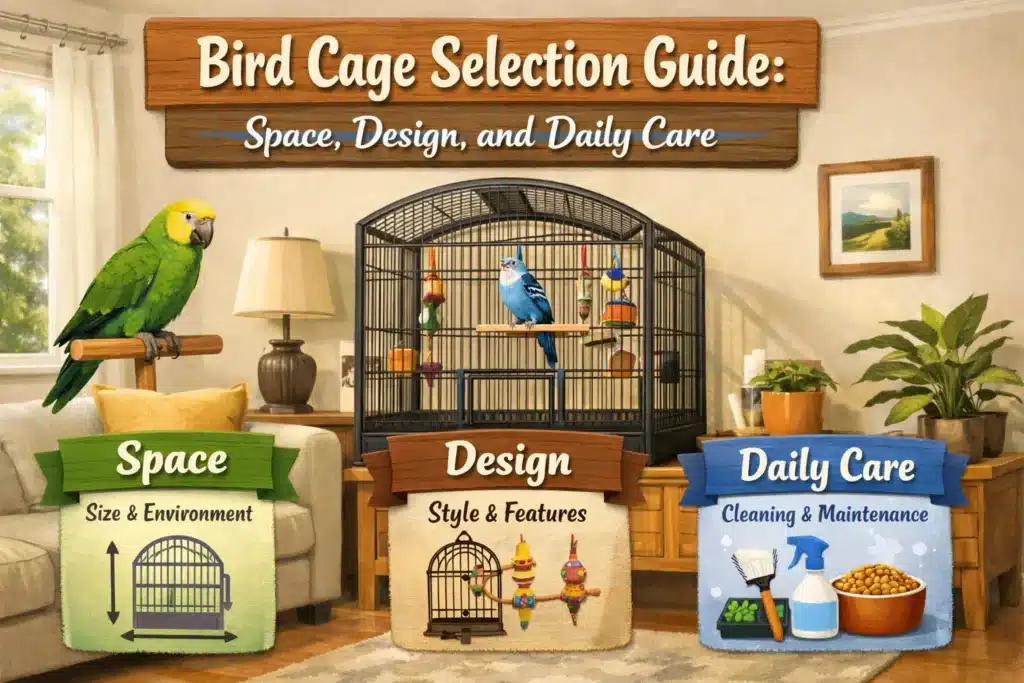
Bird Cage Selection Guide: Space, Design, and Daily Care
Bird cage choice directly determines a bird’s safety, movement, and emotional balance, according to repeated findings in avian research columns and animal welfare reports. Experts agree that while food and bonding matter, a bird’s physical environment shapes its long-term health more than most owners realize.
Why Is the Bird Cage Considered a Bird’s Entire World?
A bird cage functions as the bird’s home, shelter, dining space, and resting area combined. Newspaper articles covering captive bird welfare often describe cages as “compressed ecosystems” where space design affects breathing, muscle strength, and mood.
When a cage is thoughtfully selected, birds display:
- Calm perching behavior
- Consistent feeding routines
- Better feather condition
- Reduced stress vocalizations
Poor design, on the other hand, has been linked to inactivity and repetitive movements.

Understanding Size Before Style in a Bird Cage
Size is the most debated aspect of cage selection, and specialists answer this directly: visual appeal should never override space. A bird cage must allow full wing extension and short flights where possible.
Minimum practical size guidance:
| Bird Category | Width | Height | Bar Spacing |
| Small birds | 18–24 in | 24 in | 0.5 in |
| Medium birds | 24–30 in | 30 in | 0.6 – 0.7 in |
| Large birds | 36+ in | 40+ in | 0.8 –1 in |
A cage that restricts movement often leads to reduced activity even outside the enclosure.
Materials and Build Quality That Influence Longevity
Veterinary columns frequently highlight cage material as a hidden health factor. Modern bird cages favor powder-coated or stainless steel due to durability and hygiene.
Design features that matter:
- Non-toxic coating safe for chewing
- Smooth edges to prevent injury
- Strong locks to avoid escapes
- Flat tops for accessory placement
Round cages are generally discouraged, as birds rely on corners for spatial orientation.

Bird Feeder Cage: Encouraging Natural Feeding and Safe Access
A bird feeder cage layout plays a key role in daily nutrition and cleanliness. Studies cited in avian care journals show that separating feeding zones from resting areas reduces bacterial exposure and food waste.
Well-planned feeder placement:
- Keeps seeds and pellets clean
- Encourages natural pecking behavior
- Makes intake monitoring easier
- Reduces dominance disputes
For everyday feeding, Beaksy fits naturally into this routine as daily nutrition that supports consistent care and balanced support, helping early birds stay active and engaged within their feeding zone.
Big Bird Cage: Space, Strength, and Freedom for Larger Birds
A big bird cage is essential for parrots and strong-beaked species. Scientific investigations into captive parrot welfare often report behavioral issues linked directly to undersized enclosures.
Key requirements for larger birds include:
- Reinforced bar thickness
- Wider horizontal space for climbing
- Elevated perches for wing stretch
- Heavy-duty locking systems
A big bird cage allows these species to express natural movement without damaging feathers or joints.
Love Birds Cage: Designing a Comfortable Home for Bonded Pairs
A love bird’s cage must balance togetherness with personal space. Behavioral research notes that bonded pairs thrive when they can perch side by side while still having room to retreat.
Effective love bird cage design includes:
- Rectangular shape for short flights
- Dual feeding stations to reduce conflict
- Equal-height perches for bonding
- Quiet placement for emotional security
Overcrowding even bonded birds often leads to restlessness rather than closeness.

Is Bar Spacing as Important as Cage Size?
Yes, and experts repeatedly emphasize this point. Incorrect bar spacing increases injury risk and escape attempts.
Correct spacing ensures:
- Safe climbing
- No head entrapment
- Secure grip for feet
- Controlled interaction with surroundings
Spacing must always match species size rather than age alone.
Interior Arrangement: Turning a Cage Into a Living Space
A bird cage should feel open, not cluttered. Veterinary advice columns recommend placing essentials along the sides and leaving the center free.
Best practices include:
- Natural wood perches at varying heights
- Food bowls positioned away from droppings
- Higher resting perch for night security
- Open central area for movement
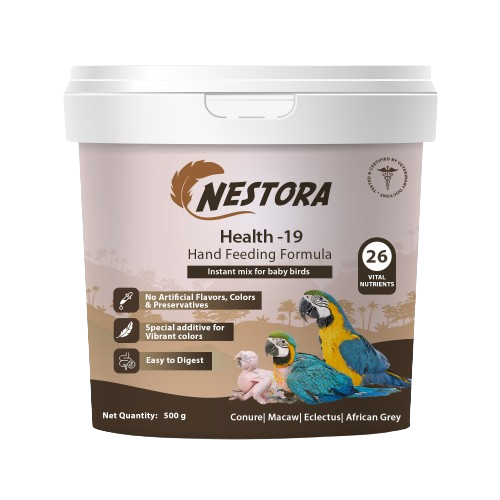
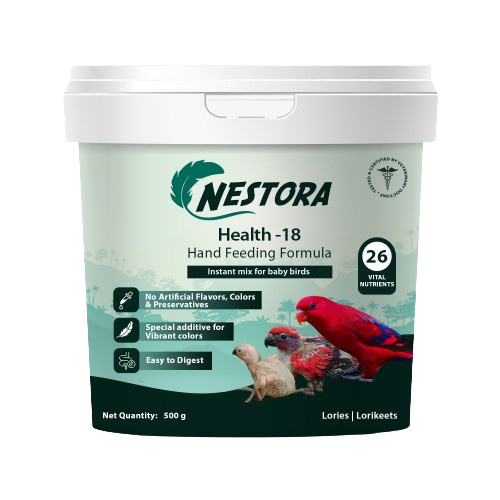
During early growth or recovery periods, advanced care nutrition such as Nestora-a premium, vet-recommended, scientifically formulated option-supports birds housed indoors when movement may be limited.
Hygiene and Cleaning: Often Overlooked but Critical
Investigative pet-care articles highlight cage hygiene as a leading cause of respiratory issues. Dust, feathers, and food residue accumulate faster than many owners expect.
Recommended routine:
- Remove leftover food daily
- Replace water twice a day
- Clean trays every 2–3 days
- Wash the entire cage monthly thrice
A clean bird cage supports breathing, feather health, and overall vitality.
Indoor Placement: Where a Bird Cage Works Best at Home
Lifestyle sections of newspapers often stress that placement matters as much as the cage itself. Birds need visibility without constant disturbance.
Ideal placement factors:
- Natural daylight without direct sun
- Away from kitchen fumes
- Eye-level height for confidence
- Quiet nights, active days
- Perches, toys for bird activities
Birds positioned thoughtfully show stronger social interaction.
Do Birds Form Emotional Attachment to Their Cage?
Ethology studies confirm that birds develop spatial memory and familiarity with their enclosure. Sudden cage changes can cause confusion and silence.
Signs of positive attachment include:
- Calm evening behavior
- Regular vocal patterns
- Willing return after free flight
- Reduced aggressive displays
Consistency builds trust and comfort.
Real Long-Tail Question: How Long Can Birds Stay Inside a Bird Cage Daily?
Experts agree that while out-of-cage time is valuable, a well-designed bird cage allows birds to remain active indoors without distress.
Best practice involves:
- Safe daily out-of-cage interaction
- Enrichment inside the cage
- Predictable routines
The cage should function as a secure base, not confinement.
Mini Insight: Urban Living and Cage Evolution
Urban homes have driven innovation in cage design. According to lifestyle reports, modern cages now focus on vertical space, removable trays, and compact layouts that suit apartments while maintaining bird comfort.
This reflects how bird care evolves alongside modern living.
Caged Bird Question Answers
- What is the ideal bird cage size for pet birds?
The ideal bird cage allows full wing extension and comfortable movement. - How should a bird’s cage be arranged?
A bird’s cage should include dual feeders and equal-height perches. - Does bird feeder cage placement affect hygiene?
Yes, proper bird feeder cage placement reduces contamination and waste. - How often should a bird cage be cleaned?
A bird cage needs daily spot cleaning and monthly thrice full cleaning.
Conclusion
A bird cage defines how a bird eats, rests, and interacts with its world every day. When space, structure, and routine align, birds show stronger movement, calmer behavior, and improved engagement. For readers seeking deeper guidance, curated essentials, or ongoing care insights, exploring resources from CKpets world can be helpful-visit their contact us page for tips, updates, and inspiration tailored to bird care.
“A bird’s comfort isn’t measured by decoration, but by how thoughtfully its space allows it to live.”